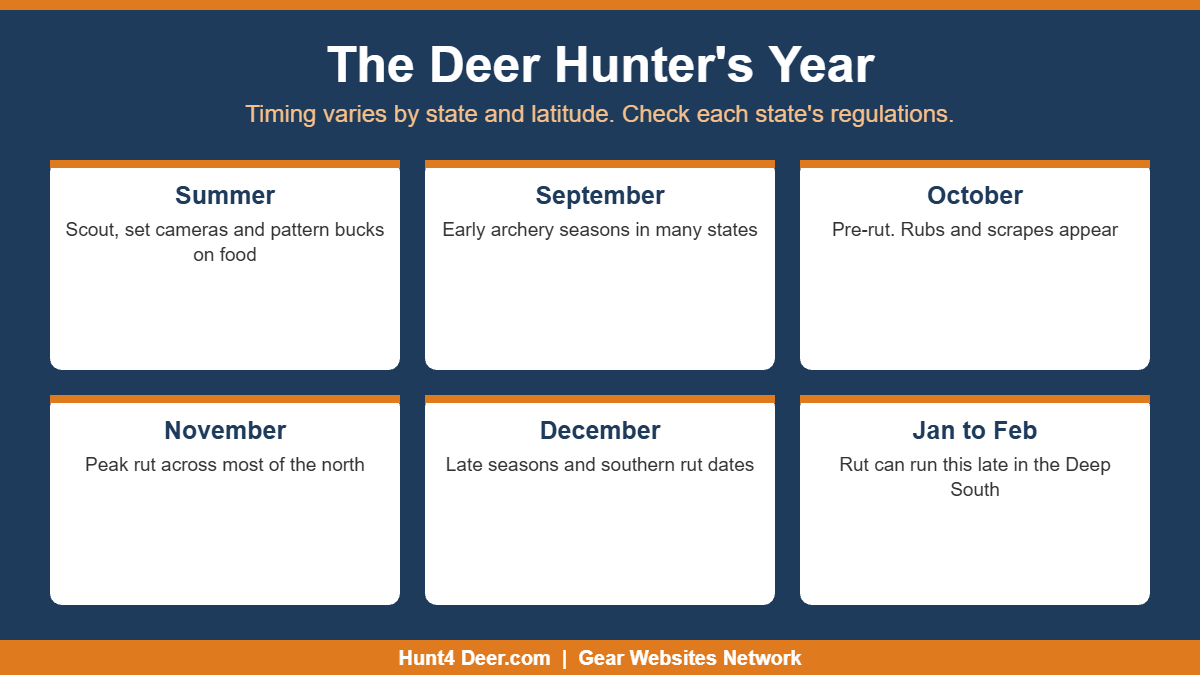
Across most of the northern two-thirds of the country, the whitetail rut peaks in November. Day length, not weather or the moon, sets the timing, so the peak lands on about the same dates each year in a given area. In the South the picture changes, and some herds breed well into winter.
How latitude changes the rut
The timing of breeding is synchronized by photoperiod, the changing amount of daylight. In Pennsylvania, for example, breeding peaks in mid-November, with nearly 70 percent of does bred that month. Along the Gulf Coast, peak breeding can fall anywhere from summer to late winter, and in Mississippi alone it ranges from late November in the northwest to mid-February in the southeast.
Phases of the whitetail rut
- Pre-rut: bucks make rubs and scrapes and start covering more ground.
- Seeking and chasing: bucks cruise in daylight looking for the first does to come into estrus.
- Peak breeding: bucks lock down with does, and movement can feel slow.
- Post-rut: tired bucks feed hard, and a few late does bring a second wave of activity.
Mule deer and Coues deer
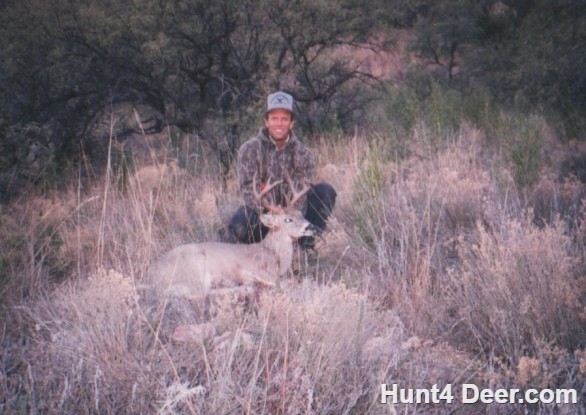
Western mule deer and southwestern Coues deer rut later than many northern whitetails. Coues deer in particular are often hunted in December and January, when bucks move to find does. Each state sets its seasons around its own herds, so always check the dates.
Season dates and rules change every year. Always check the current regulations with the state wildlife agency.