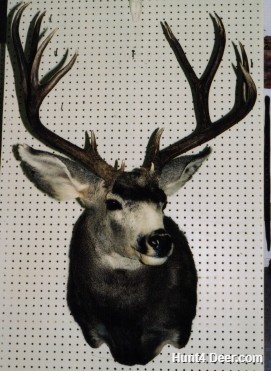
North America has two deer species that hunters chase: the white-tailed deer and the mule deer. Whitetails live across nearly the whole country, while mule deer are a western animal. The Southwest adds a third favorite, the small desert Coues whitetail.
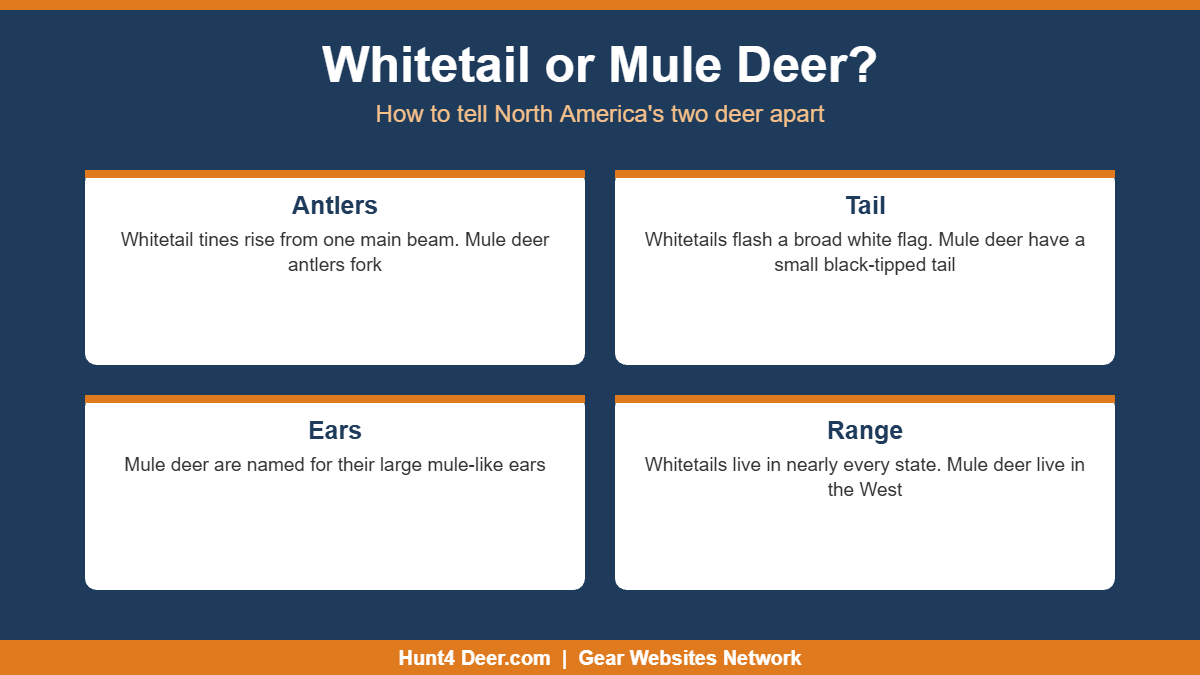
| Feature | Whitetail | Mule Deer |
|---|---|---|
| Antlers | Tines rise from one main beam | Antlers fork, then fork again |
| Tail | Broad, white underneath, raised as a flag | Small, with a black tip |
| Ears | Medium | Large, like a mule’s |
| Range | Nearly every state | Western states, east to the Plains |
White-tailed deer
Whitetails get their name from the broad tail they raise as a white flag when alarmed. Their antlers grow a single main beam with points rising off it. They live in nearly every state, from farm country to swamps and big woods.
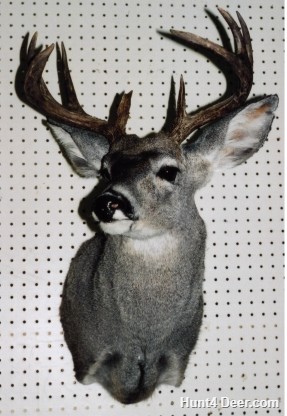
Coues whitetail
In the deserts and sky island mountains of the Southwest, hunters chase the Coues whitetail, a small subspecies of the white-tailed deer. Coues deer country is steep and open, so most are found by glassing for hours with binoculars on a tripod.

Mule deer
Mule deer are named for their large ears. Their antlers are bifurcated: the tines split off the main beam and then split again toward the tips. They range across much of the western United States, east to Kansas, Nebraska and Oklahoma.